 Madame Beauty
Madame Beauty
Madame Beauty
Choosing the right attachment can change a rushed blow-dry into a controlled styling routine. The question is not simply how powerful the dryer feels. It is how the airflow meets your hair, brush, and styling goal. This guide explains how to choose the right nozzle for a hair dryer without relying on guesswork.
Professional hairstylist Sam Villa has said, “The right tool can make all the difference.” His point applies directly to dryer nozzles. A narrow concentrator directs focused air along the hair shaft. It helps smooth cuticles and sharpen a round-brush finish. A wider nozzle spreads heat more gently. It suits thick hair, larger sections, and faster rough-drying. A diffuser works differently. Its fingers support curls while reducing disruptive airflow. That matters when definition is more important than speed.
Start with the airflow.
Hair texture changes the decision. Fine hair may need lower heat and moderate concentration. Dense, coarse hair often benefits from stronger airflow and careful sectioning. Curly hair needs less disturbance, not necessarily less power. Hold the nozzle several inches away, and keep it moving. Small details matter.
Still, no attachment solves every problem. I once assumed a narrow nozzle would create smoother hair instantly. It only made one section hot and flat. Technique mattered more than the accessory. Your best choice may require testing two nozzles under real conditions. Notice frizz, drying time, root lift, and how your hair feels afterward. A useful nozzle should improve control without making styling feel harsh or complicated.
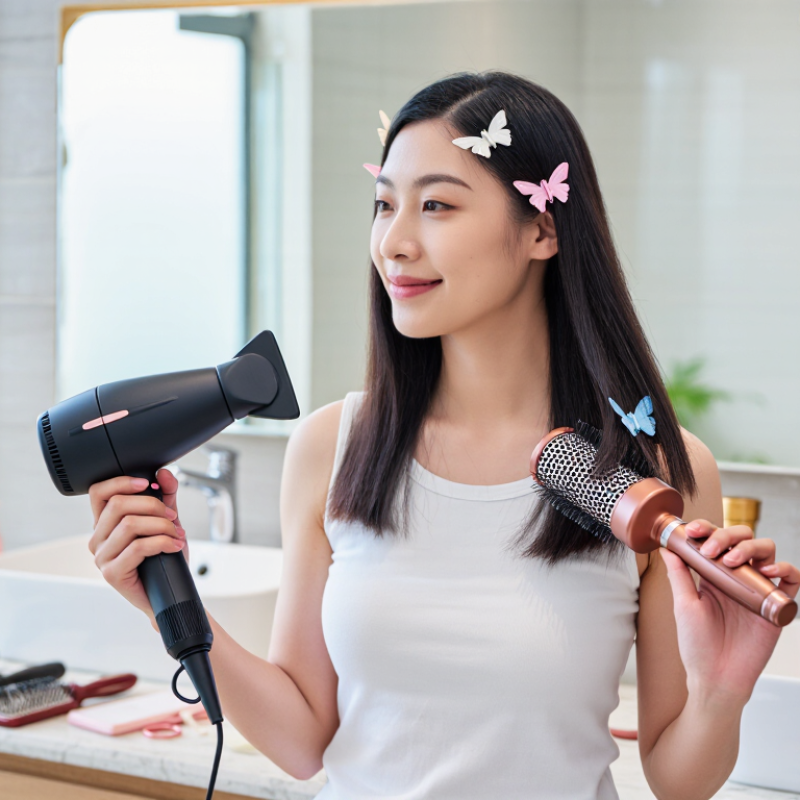
How to Choose the Right Nozzle for a Hair Dryer
Understanding Hair Dryer Nozzle Types and Their Functions
A hair dryer nozzle controls how air reaches your hair. The concentrator nozzle creates a narrow, focused stream. It works well for smoothing sections with a brush. Point the airflow from roots toward the ends. This helps the cuticle lie flatter and can reduce a rough appearance.
A diffuser spreads air across a wider area. It is useful for wavy or curly hair because it reduces direct airflow pressure. Place curls gently into the diffuser bowl. Use low heat and low speed when possible. A comb nozzle separates thick hair while drying. It can help stretch strands before styling, but pulling too hard may cause breakage.
The right nozzle depends on your hair texture, length, and goal. Fine hair often needs gentle airflow and moderate heat. Dense hair may benefit from a comb nozzle and smaller sections. I once used a concentrator on damp curls and created unwanted frizz. My technique was the problem, not only the attachment. Keep the nozzle moving, and avoid holding hot air over one spot. Leave a small distance between the dryer and your scalp. No attachment works perfectly for everyone. Test one section first. Observe the result.
| Nozzle Type | Design and Airflow | Best For | Main Function | Recommended Technique | Important Consideration |
|---|---|---|---|---|---|
| Concentrator Nozzle | A narrow, flat opening that focuses air into a controlled stream. | Straight, wavy, and medium-to-thick hair; precision styling. | Directs airflow along a specific section to improve smoothing and shape control. | Point the airflow down the hair shaft while brushing from roots toward the ends. | Keep the nozzle moving and avoid holding concentrated heat too close to the hair. |
| Diffuser | A wide bowl with prongs or fingers that spreads and softens airflow. | Wavy, curly, and coily hair; styles that benefit from reduced disturbance. | Helps dry curls more gently while supporting natural texture and volume. | Use low to medium airflow and low to medium heat; cup sections of hair from the ends upward. | High airflow can separate curl groups and increase frizz, especially before the hair is mostly dry. |
| Wide-Tooth Comb Attachment | A broad comb attachment that separates and guides strands while air passes through. | Thick, dense, curly, and coily hair that needs sectioning or stretching. | Assists with detangling, stretching, and directing hair during the drying process. | Work in small sections, begin at the ends, and move gradually toward the roots. | Use only on gently detangled hair and avoid forcing the comb through knots. |
| Pick Attachment | A raised attachment with long teeth designed to reach closer to the roots. | Dense, coily, or tightly textured hair that needs root lift. | Adds volume at the roots and helps lift dense hair while drying. | Use low or medium airflow and gently lift sections without repeatedly dragging through the hair. | Excessive tension or high heat may contribute to dryness and breakage. |
| Smoothing Nozzle | A wider, rounded outlet that distributes air more evenly than a narrow concentrator. | Straight, wavy, fine, and frizz-prone hair requiring gentle directional drying. | Helps align the outer layer of hair and create a smoother finish. | Use with a paddle or round brush while directing air from roots to ends. | A smooth finish depends on controlled airflow, suitable heat, and consistent brush tension. |
| Gentle Air Attachment | A broad, perforated design that spreads airflow over a larger area at lower intensity. | Fine, fragile, damaged, or sensitive hair and scalp areas. | Reduces direct airflow intensity and supports more comfortable, gradual drying. | Keep the dryer at a moderate distance and move continuously around the head. | Drying may take longer because the airflow is dispersed over a wider area. |
It creates a narrow airflow stream. Use it with a brush for smoothing and shaping.
Keep the opening parallel to the hair shaft. Aim air from roots toward the ends. Keep moving.
Yes. It spreads airflow gently and helps protect the natural curl pattern. Use low heat and low speed.
Place curls inside the bowl gently. Lift sections toward the scalp. Avoid rough movements.
A comb or pick attachment can separate dense sections. Move slowly from roots to ends. Do not force knots.
Choose gentle airflow and moderate heat. Start with less heat. Check each section after one pass.
Yes. I once used a concentrator on damp curls and created puffiness. My technique was partly responsible.
Keep it about 15 centimetres away. Move continuously to reduce hot spots and surface stress.
No. Higher wattage may increase airflow, but adjustable heat and speed matter more.
Check the connection, seams, and edges. A loose or sharp attachment may be unsafe. Test one section first.
Choosing the right hair dryer nozzle can make styling easier, faster, and more effective. To understand how to choose the right nozzle for a hair dryer, first consider the main nozzle types and their purposes. A concentrator nozzle directs airflow for smooth, precise styling, while a diffuser spreads air gently to enhance natural waves and curls. Wide nozzles can help dry thick or long hair more efficiently, whereas narrow nozzles are useful for targeted control and polished results. Your hair type and styling goal should guide your selection, whether you want straight, wavy, curly, or coily hair.
In addition to shape, consider adjustable heat settings, airflow strength, and durable, heat-resistant materials. Lower heat and gentle airflow are generally better for fragile, curly, or coily hair, while stronger airflow may suit thicker hair. Proper use also matters: keep the nozzle moving, avoid excessive heat, and clean it regularly to remove dust and hair buildup. With the right match, a nozzle can support healthier-looking hair and more controlled styling.
